What does it actually take to turn a meme coin trading run into a seven-figure result?
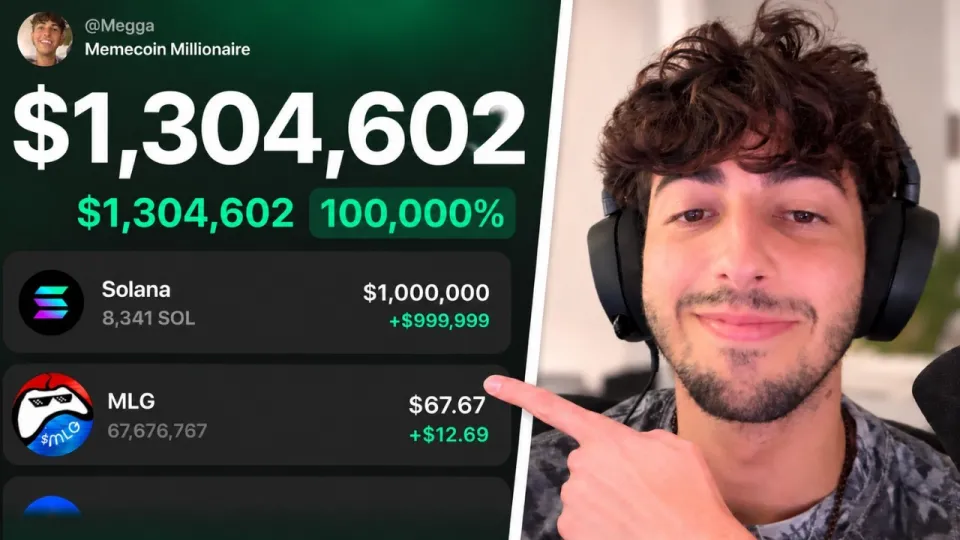
Video: How I Made $1,000,000 Trading Memecoins (FULL BREAKDOWN)
Need articles like this for your video? They help promote it on YouTube and Google — order them in the Telegram bot @sat_sit_bot. The bot writes and publishes the articles itself (with your YouTube video embedded) on popular topical websites (no ads). Try it free: 50 articles on us.
· based on the channel Megga
Key takeaways
- Megga frames the $1,000,000 result as the output of 9–12 hours of daily screen time in the meme coin "trenches", not a single lucky trade.
- The stated edge is early entry into new launches and tech-narrative tokens, rotating capital fast instead of holding long-term.
- A free trading course is offered via Whop, and the recommended trading platform is Padre, promoted for low fees.
- Drawdowns and blown wallets are treated as part of the process — the video's own comment section is split between inspiration and rug-pull accusations.
- Viewers' main objections are liquidity (someone must lose for someone to win) and whether a full-time schedule is realistic alongside a job.
A meme coin is a crypto token with no cash flows, no product and no valuation model — its price is driven almost entirely by attention, liquidity and timing. Turning that into a $1,000,000 trading result, as Megga lays out in the breakdown video, comes down to treating it as a full-time operational job: 9 to 12 hours a day in front of screens, hundreds of small decisions, strict position sizing and a tolerance for repeated losses. Anyone who wants the structured version of that workflow can start with the free trading course on Whop before risking a single dollar.
Why meme coin trading is a screen-time business, not a lottery ticket
The core claim of the breakdown is that the seven-figure number is a byproduct of volume of reps, not one viral trade. Meme coins live on chains such as Solana, where new tokens launch by the thousands every day and most die within hours. The only way to be early on the few that survive is to be watching launches continuously — which is exactly what the 9-to-12-hour days described in the video buy you.
What that time actually goes into:
- Scanning new launches and monitoring which ones attract real volume rather than wash trading.
- Reading the on-chain data — holder distribution, whether top wallets are clustered, whether liquidity is locked or removable.
- Tracking social momentum on X and Telegram, because narrative moves before price does.
- Executing and exiting: entries within seconds, exits in tranches rather than all at once.
- Reviewing the day's trades to separate process mistakes from bad luck.
That list is why the honest answer to "how long until I make money" is usually "how many hundred launches have you actually sat through".
The risk rules that make a $1,000,000 run survivable
Position sizing is what separates a trader who compounds from one who donates liquidity. A meme coin can drop 90% in minutes, so the only defensible approach is to assume every single position can go to zero and size accordingly.
Practical rules that follow from that assumption:
- Cap any single bet at a small fixed percentage of the bankroll, so ten consecutive losses are annoying rather than fatal.
- Take partial profits on the way up instead of waiting for a target that may never print — meme coins rarely give a second exit.
- Keep a separate wallet for experiments, so a phishing link or a malicious token approval cannot reach the main stack.
- Stop trading after a defined daily loss; revenge trading in a 24/7 market is how accounts get wiped overnight.
Viewers in the comments describe exactly this failure mode: a 200x winner followed by a drained wallet and a string of losses that took months to recover from mentally. The lesson is that a single security mistake can erase more than a hundred good trades earn.
Where the accusations of rug pulling come from
A public $1,000,000 meme coin result almost always attracts the same criticism, and this video is no exception. Several of the most-liked comments accuse the creator of profiting from rug pulls or of baiting viewers into becoming exit liquidity. That reaction is worth understanding rather than dismissing.
In a token with no fundamentals, every dollar of profit is a dollar someone else lost. Early buyers who sell into a launch's first wave of hype are, mechanically, selling to later buyers at a higher price. When those later buyers are the audience watching the video, the optics are uncomfortable even when nothing illegal happens. The distinction that matters:
- Trading a token you did not create and selling before the collapse is legal, if brutal, speculation.
- Launching a token, promoting it and dumping your supply on followers is market manipulation and, depending on jurisdiction, fraud.
The video does not claim the second, and the criticism in the comments is largely about the first. Anyone copying the strategy should be clear-eyed that they are the later buyer in someone else's trade far more often than they are the early seller.
Realistic expectations if you are starting with a day job
The most common question under the breakdown is how anyone holds a job and still trades meme coins seriously. The honest answer is that you mostly cannot replicate a 9-to-12-hour schedule — but you can still participate with a narrower process.
A workable part-time version looks like this:
- Pick one or two fixed windows per day (for example, early morning and evening) and trade only then.
- Follow a small number of traders whose calls you can verify on-chain, instead of scanning launches yourself.
- Reduce position size proportionally to your reduced screen time — less attention means slower exits.
- Skip the fastest-moving launches entirely; they require monitoring you do not have.
What you should not do is copy full-time sizing on part-time attention. The traders making seven figures in this niche are not smarter per trade; they are simply present for more of them and exit faster when a position turns.
What the tech-narrative tokens actually require
A recurring theme in the discussion is how to judge whether a new "tech" meme coin — the kind that borrows a story from AI, infrastructure or a viral product — will run like the big names or fade in a day. There is no formula, but there are filters.
Ask three questions before entering: does the token have a narrative that a stranger can repeat in one sentence, is there real trading volume from many wallets rather than a handful, and is the team's supply visibly locked or vested? If any answer is unclear, the trade is a gamble on a chart, not a thesis. Being early — entering while market cap is still in the tens of thousands — is where the asymmetric returns sit, but it is also where most of the scams live, so verification has to come before conviction.
Useful links
- Free trading course on Whop
- Padre trading platform (low fees)
- Megga on Twitch
- Megga on TikTok
- Megga on X
The takeaway from Megga's meme coin breakdown
The $1,000,000 figure in Megga's breakdown is best read as a record of volume and discipline rather than a secret strategy: thousands of launches screened, small positions sized for total loss, fast exits and a high tolerance for drawdowns. The same video that inspires viewers to start also shows why most of them will not finish — the schedule is brutal, the losses are constant and the security risks are real. If you take one thing from the channel's breakdown, take the process: verify before you buy, size as if the token is already dead and treat every profit as someone else's loss. Start with the free course and paper-trade the workflow before committing capital.
Source: How I Made $1,000,000 Trading Memecoins (FULL BREAKDOWN) · Markdown version
Questions & answers
How much capital do you need to start trading meme coins seriously?
There is no fixed threshold, but the practical requirement is enough capital that a total loss on any single position does not change your life. Most experienced traders risk a small fixed percentage per trade, which means a $1,000 bankroll and a $100,000 bankroll follow the same rules — only the absolute numbers differ. What actually gates results is screen time and process quality, not the starting balance.
Is meme coin trading just profiting from other people's losses?
Mechanically, yes — in a token with no cash flows, every dollar of gain is a dollar another buyer paid. That is true of any speculative asset, but meme coins make it visible because the cycle is hours rather than years. The line between legal speculation and fraud is whether you created or promoted a token while secretly selling your own supply into your followers' buys.
Can you trade meme coins part-time while working a job?
Yes, but not at the intensity shown in full-time breakdowns. The realistic approach is to trade in one or two fixed daily windows, follow a small number of traders you can verify on-chain, and size positions down to match your slower exit speed. Trying to copy full-time position sizes with part-time attention is how part-time traders get liquidated.
What is the biggest risk beyond losing money on a bad trade?
Wallet security. Phishing links and malicious token approvals can drain an entire wallet in one click, and several viewers describe exactly that after a big win. Keep a separate wallet for experiments, never sign approvals you do not understand, and assume that any link sent in a group chat is hostile until verified.