How to trade bitcoin into a decisive weekly close without guessing the next move
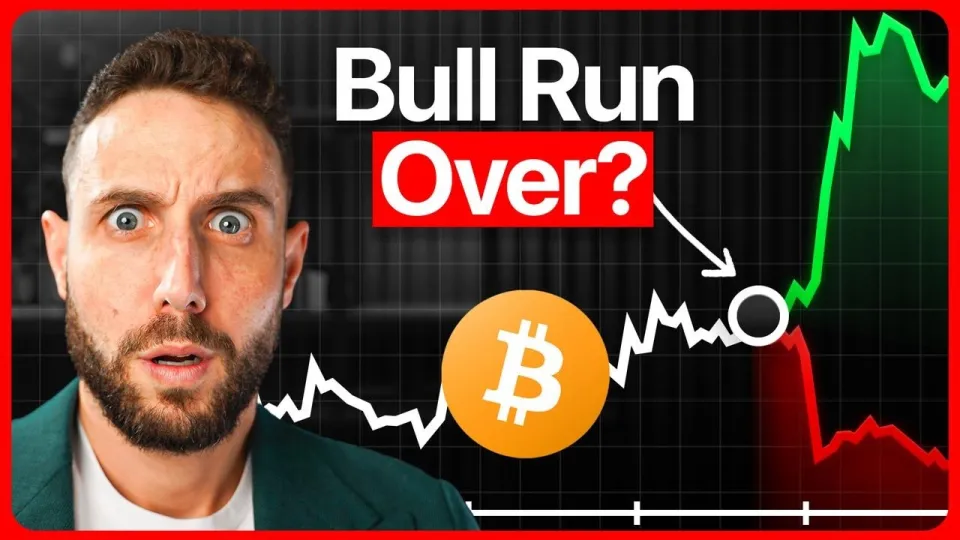
Video: Bitcoin Has 2 DAYS to Save the Crypto Bull Run
Need articles like this for your video? They help promote it on YouTube and Google — order them in the Telegram bot @sat_sit_bot. The bot writes and publishes the articles itself (with your YouTube video embedded) on popular topical websites (no ads). Try it free: 50 articles on us.
· based on the channel EllioTrades
Key takeaways
- Bitcoin's weekly close is the single most important trigger in the current setup, according to EllioTrades' breakdown, because a weekly candle close carries far more weight than intraday noise.
- The bull case stays intact while BTC holds its higher-time-frame support; a weekly close below that zone flips the plan from buying dips to protecting capital.
- Altcoins are a second-step trade: rotation only makes sense after BTC confirms support, not while bitcoin is still searching for a floor.
- Weekend liquidity is thin and market makers are largely absent, so weekend moves should be treated as unreliable until the weekly candle actually closes.
- Position sizing matters more than prediction here: scaling in on confirmation beats trying to catch the exact low.
Bitcoin has very little room left before its weekly candle closes, and that close is the cleanest signal traders get in this setup. The plan is simple: hold higher-time-frame support, wait for the weekly close to confirm, and only then rotate into altcoins. Anyone positioning early can register on Kalshi through this link to trade event outcomes around the same thesis instead of guessing direction on spot alone.
Why the weekly close matters more than any intraday candle
A weekly close is the price the market agrees to hold over seven days, and it is the level that higher-time-frame traders, funds and systematic models actually reference. Intraday wicks get bought and sold by market makers hunting liquidity; a weekly candle close is much harder to fake because it requires sustained positioning.
That is why the current setup is described as a two-day window. If bitcoin closes the week above its support band, the structure that produced the recent run stays valid and dip-buying remains the higher-probability trade. If it closes below, the burden of proof flips to the bulls, and the correct response is to reduce exposure rather than average down on hope.
Three things to check when the candle prints:
- Where the close lands relative to the support zone, not where the wick went.
- Whether the close comes with expanding volume or on fading volume.
- Whether the close holds on a retest in the following session.
The levels and conditions that define the bull case
The bull case is conditional, not emotional: bitcoin has to keep its higher-time-frame support intact on a closing basis. A break of that zone on the weekly turns the same chart into a lower-high structure, which is the technical definition of a trend losing control.
On the upside, the reference points are the recent swing highs and the round numbers that sit above them. Round numbers like 100K act as magnets for liquidity and as psychological barriers where sellers cluster, so a push into that area is where you evaluate whether the move has real demand behind it or is just a squeeze.
A practical checklist for the next few sessions:
- Mark the support band on the weekly chart and treat only closes as valid breaks.
- Mark the nearest swing high and the round number above it as the first supply zone.
- Note the invalidation level before entering anything, so the stop is defined by structure rather than by the size of the loss you can tolerate.
How to size entries when the signal is binary
When a setup is binary, the mistake most traders make is taking a full position before the signal resolves. The alternative is to split the plan into a pre-close tranche and a post-close tranche: a small starter position while support holds, and the rest only after the weekly candle confirms.
Risk per trade should stay in a range you can repeat ten times in a row without emotional damage, typically a small single-digit percentage of the account. If the weekly close comes in below support, the pre-close tranche gets cut at the invalidation level and the post-close tranche is never opened. That structure turns a coin-flip moment into a defined-risk decision.
Altcoins: when rotation actually makes sense
Altcoins are a second-derivative trade. They outperform when bitcoin is stable or grinding higher, and they bleed when bitcoin is still hunting for a floor, because capital rotates to the safest asset first. Buying alts while BTC is unresolved means taking two risks at once.
Once the weekly close confirms support, the rotation logic becomes straightforward: look for altcoins that held their own higher-time-frame support during the bitcoin drawdown, showed relative strength on the bounce, and have a clear catalyst. Names that only move when bitcoin rips are the last thing to buy and the first thing to sell.
The comments around this setup are split between traders convinced the bull run is over and traders who see a single retracement being over-interpreted. Both camps are reacting to the same candle; the difference is whether they have a rule for what happens if the close goes the other way.
Weekend liquidity and other traps in this setup
Weekend sessions run on thin liquidity because large market participants are largely absent, which means moves made on a Saturday or Sunday can be reversed the moment real volume returns. Treat weekend breakouts and weekend breakdowns as provisional until the weekly candle closes.
Other common traps in a make-or-break week:
- Shorting a coin into support simply because it looks weak, without a close below the level.
- Assuming a short bear market automatically produces a strong bull market next; short corrections often produce weak, choppy recoveries rather than explosive ones.
- Confusing a lower price with a better entry. A cheaper entry only matters if the structure that justified buying is still intact.
- Ignoring event risk outside crypto, such as index-inclusion decisions affecting large bitcoin-holding companies, which can move sentiment independently of the chart.
Questions traders keep asking about this setup
Many readers want a precise number for what counts as a buying opportunity, but the honest answer is structural: a buying opportunity is a price where support holds on a closing basis and the invalidation level is close enough to make the risk acceptable. That can be near current prices or several percent lower, and the level matters far less than the rule.
The second recurring question is whether wanting a cheaper entry contradicts the bull case. It does not, as long as the entry is tied to support holding. What breaks the bull case is a confirmed weekly close below support, not the existence of a pullback.
Tools and links mentioned in the breakdown
- Trade event contracts on Kalshi and get the promotional bonus
- Liquid trading with 10% off fees
- WEEX deposit bonus up to $4,000
- Follow the public trading journey on fomo
- EllioTrades on X
Bottom line on bitcoin's decisive close
The whole setup reduces to one question: does bitcoin close the week above support or below it? Above, the bull structure survives and dips remain buyable with defined risk; below, capital preservation takes priority and altcoin rotation waits. The value of a plan like this is that it removes the need to predict, because both outcomes already have an action attached. EllioTrades lays out this trading plan for BTC and altcoins in the video breakdown, including the levels being watched and the coins considered if support holds. If you want to position around the outcome rather than the noise, start with the Kalshi bonus link and keep your risk defined.
Source: Bitcoin Has 2 DAYS to Save the Crypto Bull Run · Markdown version
Questions & answers
Does a weekly close below support end the bull run for good?
No single candle ends a cycle, but a confirmed weekly close below higher-time-frame support shifts the probabilities against the bulls. It means the burden of proof moves to buyers and the correct response is to reduce risk, wait for a new base, and only re-engage when structure rebuilds.
Why not just buy altcoins now since they are cheaper?
Cheaper is not the same as safer. Altcoins depend on bitcoin stability for liquidity, so buying them while BTC is still deciding its weekly direction stacks two risks together. Rotation works better after BTC confirms support and relative strength shows up in specific names.
Is a two-day window enough to judge the whole market?
The window matters because it contains the weekly candle close, which is the reference point for higher-time-frame positioning. Intraday moves inside that window are mostly liquidity noise, so the only thing worth reacting to is where the candle actually finishes.
How should weekend price action be treated?
With suspicion. Liquidity is thin when large participants are away, so weekend breakouts and breakdowns often reverse once real volume returns. Treat weekend moves as provisional and wait for the weekly close before changing your plan.